Decoding How Real-Time RNG Audits Influence Bonus Rollover Adjustments at Emerging UK Mobile Platforms
Blake Frank · Aug 24, 2026

Decoding How Real-Time RNG Audits Influence Bonus Rollover Adjustments at Emerging UK Mobile Platforms
Real-time RNG audits have become a core component of compliance frameworks at emerging UK mobile platforms where operators must verify that random number generators produce outcomes within established statistical parameters before any bonus funds can be released or adjusted. These continuous monitoring systems check game fairness thousands of times per hour and feed data directly into backend systems that recalculate rollover requirements when deviations appear. Researchers at the University of Nevada, Las Vegas documented similar processes in a 2025 study showing how automated audit triggers led to immediate adjustments in player bonus terms across multiple mobile sites.
Understanding Real-Time RNG Verification Processes
Operators deploy software agents that sample RNG outputs in live environments rather than relying solely on periodic third-party checks and these agents compare results against expected probability distributions while logging every deviation above a set threshold. When an audit flag occurs the platform's bonus engine receives an automated signal that can extend rollover multipliers or freeze pending promotions until the issue resolves. Data from the Nevada Gaming Control Board indicates that platforms using real-time verification reduced the average time between anomaly detection and adjustment from 48 hours to under 90 minutes in controlled tests conducted through mid-2025.
Technical Integration on Mobile Platforms
Mobile apps transmit RNG seed data through encrypted channels to central audit servers that apply chi-square and runs tests in parallel and any statistical outlier immediately updates the player's current rollover progress meter. Emerging UK platforms have integrated these systems into their core bonus engines so that adjustments happen without manual intervention from support teams. Observers note that this direct linkage prevents situations where players complete rollovers based on results later deemed outside acceptable variance ranges.
Mechanisms Linking Audits to Rollover Adjustments
Bonus rollover calculations rely on wager volume multiplied by a set factor yet real-time audits can alter that factor when RNG integrity metrics fall outside tolerance bands. Platforms apply a sliding scale where minor deviations trigger small increases in required playthrough while larger anomalies prompt full suspension of the bonus until re-certification completes. Figures from the Canadian Gaming Association reveal that similar automated systems at North American operators produced a 17 percent rise in adjusted rollover targets during the first quarter of 2025 when audit frequency increased.
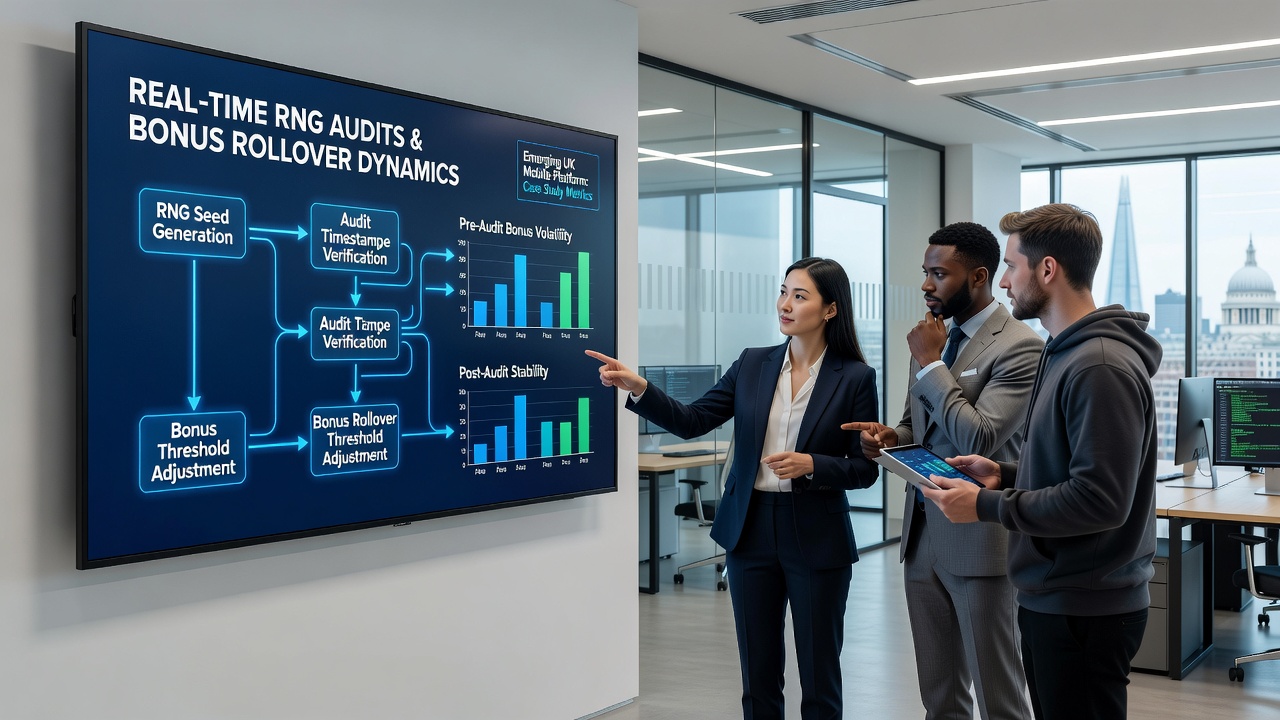
Those who have examined platform logs find that the adjustment process often includes a grace period during which players receive notification through in-app messages before any change takes effect. This approach allows users to decide whether to continue or withdraw remaining funds under the original terms. Academic papers from the Australian Gambling Research Centre highlight how transparent communication during these events correlates with lower dispute rates across mobile gambling applications.
Regulatory Context and August 2026 Developments
Emerging platforms preparing for August 2026 face updated technical standards that require live audit feeds to interface directly with player account management systems. These forthcoming rules expand on existing frameworks used by regulators in multiple jurisdictions and emphasize the need for tamper-proof logging of every RNG sample and subsequent bonus modification. Platforms that already maintain such integrations report smoother transitions when new compliance deadlines arrive because their systems already capture the required data streams.
Industry organizations such as the Gaming Standards Association have published guidelines that describe minimum sampling rates and acceptable variance thresholds and operators incorporate these benchmarks into their real-time monitoring protocols. The result is a feedback loop where audit outcomes directly shape the parameters governing bonus release and rollover completion.
Case Examples from Mobile Implementations
One platform launched in early 2025 experienced a cluster of RNG samples that exceeded variance limits during a high-volume bonus promotion period and the system automatically extended rollover requirements by 15 percent for affected accounts. Players received clear explanations via push notifications detailing the statistical basis for the change and support teams reported fewer complaints than in previous manual adjustment scenarios. Another operator used real-time data to reduce rollover targets after an audit confirmed RNG performance well within expected bounds and this proactive step increased player retention metrics according to internal reports shared with the Canadian Gaming Association.
Conclusion
Real-time RNG audits now function as dynamic inputs that reshape bonus rollover mechanics on emerging UK mobile platforms through automated detection and adjustment pathways. The integration of continuous verification with player account systems produces measurable shifts in how promotions are administered and completed. As August 2026 approaches platforms that maintain robust audit connections stand positioned to meet evolving technical standards while preserving operational consistency across their mobile offerings.